Common Vinyl Siding Mistakes: A Professional Guide to Building
The ubiquity of vinyl cladding in the North American residential landscape is often attributed to its economic accessibility and superficial versatility. However, beneath the veneer of “maintenance-free” living lies a complex hydrothermal assembly that is remarkably sensitive to human error. Unlike traditional timber or masonry, polyvinyl chloride (PVC) possesses a high coefficient of thermal expansion, a physical reality that dictates every aspect of its installation. Common Vinyl Siding Mistakes. When a facade fails, it is rarely due to a deficiency in the polymer itself, but rather a failure of the installer to respect the laws of physics that govern the material’s behavior.
In the contemporary building environment, the margin for error has narrowed. Modern homes are built with higher airtightness standards and thicker insulation, which paradoxically reduces the “drying potential” of the wall. If moisture bypasses the vinyl skin—which is a statistical certainty over the life of a structure—the assembly’s ability to evacuate that moisture determines whether the home remains structurally sound or succumbs to systemic rot. Consequently, the study of the exterior envelope must move beyond aesthetics to address the invisible dynamics of vapor drive and mechanical movement.
A sophisticated understanding of this field requires an analytical deep dive into the “hidden” components: the weather-resistive barriers, the integrated flashings, and the specific fastener depths that allow a house to “breathe” while remaining shielded. This investigation serves as a definitive reference for property owners and architects, moving past surface-level marketing to examine the technical nuances of the American building skin. By treating the cladding as a dynamic system, we can mitigate the long-term capital risks associated with one of the most misunderstood materials in modern construction.
Understanding “common vinyl siding mistakes”
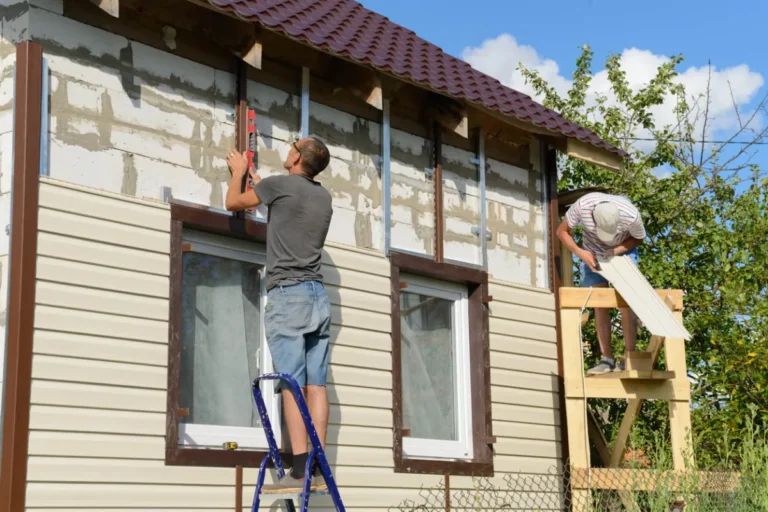
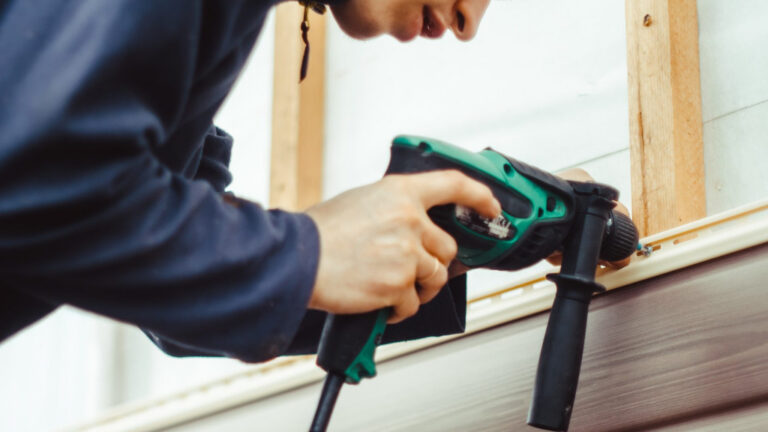
Identifying common vinyl siding mistakes requires a shift in perspective from the visual to the mechanical. The most pervasive error in the industry is the fundamental misunderstanding of the fastener’s role. In almost every other construction context, a nail is driven “home” to secure a board tightly to a frame. In vinyl application, this is a catastrophic error. Because PVC expands and contracts significantly with temperature fluctuations—up to 3/4 of an inch on a standard 12-foot panel—the fastener must function as a guide rail rather than a clamp. When a panel is “hard-nailed,” it is essentially pinned against a wall that is moving at a different rate, leading to the characteristic “oil-canning” or buckling that plagues low-quality installations.
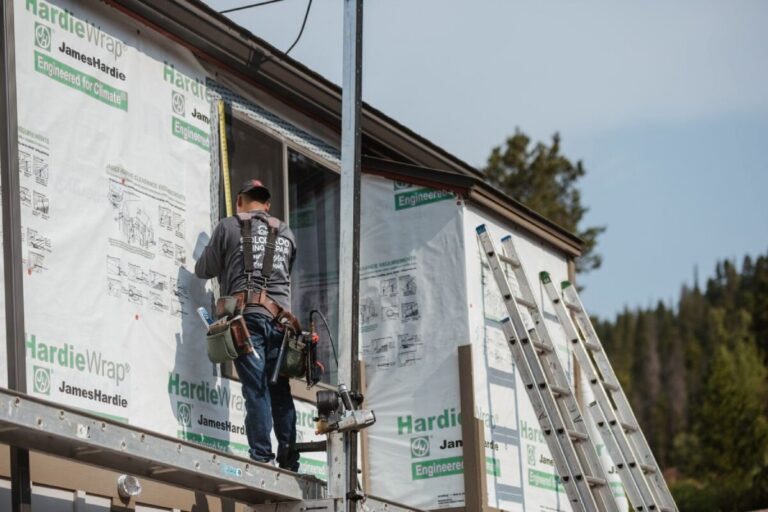
Oversimplification in this sector often stems from the belief that vinyl is a “waterproof” barrier. It is not. Vinyl is a “shedding” system designed to deflect the vast majority of bulk water, while the real work of moisture management happens at the weather-resistive barrier (WRB) layer. Many failures occur because the installer focuses on the beauty of the plastic while neglecting the “lap” and “tape” integrity of the housewrap. If the secondary drainage plane is compromised, even a visually perfect siding job will result in structural decay within a decade.
Furthermore, the risks of oversimplification extend to the “J-channel” and accessory management. These components are designed to hide cut ends, yet they frequently act as unintended funnels. Without proper “weep holes” or diversion flashings at window headers, these channels trap water against the sensitive wooden casing. A professional audit of common vinyl siding mistakes reveals that the most expensive repairs are almost always caused by these hidden hydraulic failures rather than the visible warping of the panels themselves.
Deep Contextual Background: The Evolution of the Managed Envelope
The transition from organic cladding to synthetic polymers in the mid-20th century was driven by a post-war desire for industrial efficiency. In the 1950s and 60s, aluminum was the “high-tech” alternative to wood, but it dented easily and conducted heat too efficiently. By the 1970s, vinyl emerged as the dominant commodity, promising a “permanent” color and no rot. However, early formulations lacked UV stabilizers, leading to the brittle, faded facades of the 1980s.
As material science improved, the polymer itself became more resilient, but the building science of the “wall sandwich” lagged behind. We began building “tighter” homes with fiberglass insulation and interior vapor barriers. This created a new problem: when water inevitably bypassed the vinyl—via wind-driven rain or capillary action—it had no way to dry toward the inside or the outside. The 1990s and early 2000s were defined by a “mold crisis” in synthetic-clad homes, which forced the industry to adopt the “managed drainage” model we use today. We now understand that the siding is merely a sacrificial rainscreen.
Conceptual Frameworks and Mental Models
To evaluate an installation, practitioners must utilize specific mental models:
1. The “Floating Skin” Framework
Vinyl must be viewed as a curtain, not a coat. If you cannot slide a siding panel horizontally with your hand after it is nailed, it is installed incorrectly. This model prioritizes the “movement gap” (typically 1/4″ to 3/8″ at all terminals) to prevent buckling.
2. The Hydrothermal Drainage Model
This model assumes water will get behind the siding. The goal of the installation is to ensure that gravity has a clear path to pull that water down to the “starter strip” and out of the wall assembly without hitting a horizontal obstruction.
3. The Solar Vapor Drive Logic
Sunlight hitting a dark-colored, wet vinyl wall drives moisture inward toward the air-conditioning. The mental model must account for the “perm rating” of the underlayment. If the barrier is too “tight,” this vapor condenses on the sheathing, leading to “ghosting” and mold.
Key Categories of Failure and Trade-offs
| Category | Primary Error | Long-Term Consequence | Corrective Logic |
| Fastening | Hard-nailing (driving nails flush) | Oil-canning and warping | Leave 1/32″ gap (dime thickness) |
| Geometry | Insufficient terminal gaps | Buckling at J-channels | 1/4″ gap in summer; 3/8″ in winter |
| Hydraulics | Missing window head flashings | Rotting window headers | Install “drip caps” integrated with WRB |
| Aesthetics | Improper panel overlapping | Visible seams and wind-lift | Overlap by 1″, away from high-traffic areas |
| Substrate | Installing over uneven walls | “Wavy” appearance | Fur out low spots with wood shims |
| Thermodynamics | Melting from reflected light | Permanent distortion | Avoid proximity to Low-E windows |
Realistic Decision Logic
If a property owner is choosing between a high-end “thick” vinyl (.046 gauge) and a standard vinyl (.040 gauge), the thicker material offers better impact resistance, but it does not mitigate the risks of improper fastening. In fact, thicker vinyl is often more prone to buckling because it is stiffer. The logic should always prioritize “Installation Quality” over “Material Gauge.”
Detailed Real-World Scenarios Common Vinyl Siding Mistakes
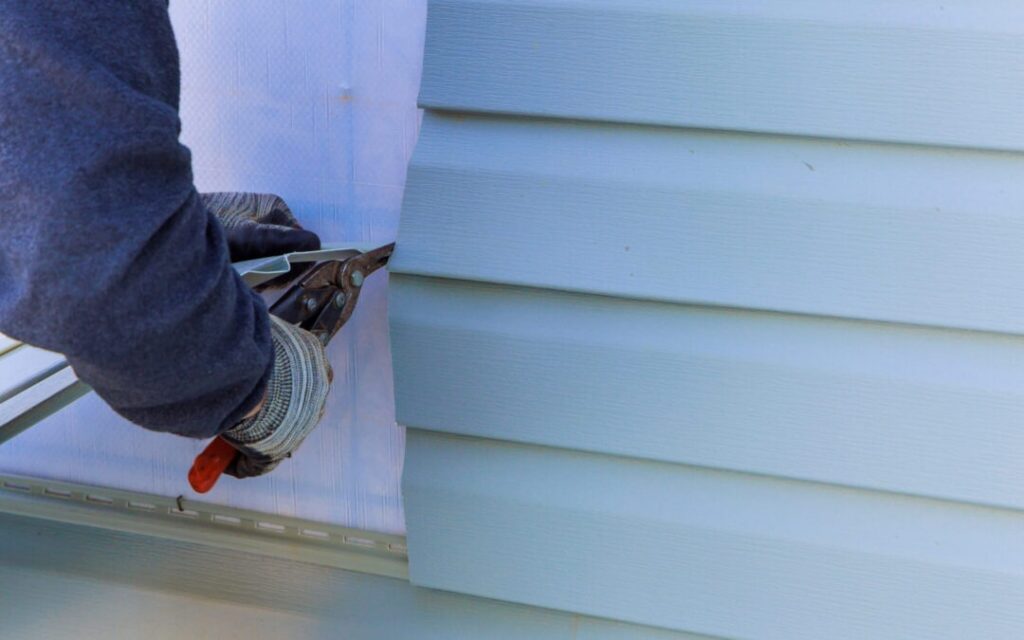
Scenario 1: The “Low-E” Reflection Melt
A homeowner installs high-performance, Low-E windows on a neighboring structure. The sunlight reflects off the slightly concave glass, concentrating UV rays like a magnifying glass onto the vinyl.
-
Failure: The vinyl reaches its “heat distortion temperature” (approx. 160°F–165°F) and sags.
-
Prevention: This is an environmental constraint failure. In these zones, heat-resistant vinyl or a different material (fiber cement) must be used.
Scenario 2: The High-Wind “Unzipping”
In a coastal region, a storm causes a vinyl panel to detach. Because the panels are interlocked, the wind enters the breach and “unzips” the entire side of the house.
-
Failure: The installer used standard nails instead of “ring-shank” nails or failed to engage the lock fully.
-
Second-Order Effect: The exposed housewrap is shredded by wind, allowing bulk water to saturate the fiberglass insulation.
Scenario 3: The “Siding-to-Grade” Capillary
Vinyl is installed all the way to the soil to hide a concrete foundation.
-
Failure: While vinyl doesn’t rot, it traps moisture against the wooden sill plate. Insects (termites/carpenter ants) use the dark, moist space behind the vinyl as a highway into the structure.
-
Logic: Siding must maintain a 6-inch clearance from the ground.
Planning, Cost, and Resource Dynamics
The economic profile of a siding project is often skewed by a focus on “sticker price” rather than “Life-Cycle Cost” (LCC).
-
Direct Costs: Materials (30%), Labor (60%), Disposal (10%).
-
Indirect Costs: The “Recoloring Tax.” While vinyl doesn’t need paint, it does oxidize. After 15 years, a “maintenance-free” facade may require professional cleaning or restoration to maintain curb appeal.
-
Opportunity Cost: Failing to add $2,000 in “continous insulation” (foam board) during a $15,000 siding job is a lost opportunity for energy savings that cannot be recovered for another 25 years.
Cost of Correction Table
| Error Type | Cost to Prevent | Cost to Fix (5 Years Later) |
| Improper Fastening | $0 (Training) | $12,000 (Full Tear-off) |
| Missing Flashing | $150 (Materials) | $8,000 (Header Rot Repair) |
| Poor WRB Lapping | $200 (Labor) | $25,000 (Structural Rebuild) |
Technical Tools and Support Systems
Precision in vinyl application requires moving away from the “hammer and nail” approach toward specialized systems:
-
Vinyl Siding Staplers: With specialized offsets to ensure the staple never touches the siding hem.
-
Depth-Control Fasteners: Pneumatic tools that stop the nail 1/32″ short of the wall automatically.
-
Snap-Lock Punches: Used to create “lug” tabs on the top edge of a panel so it stays in the finish trim without being nailed.
-
Blower Door Testing: Auditing the air barrier before the siding goes on to ensure the “managed wall” is actually airtight.
-
Moisture Meters: Checking the moisture content of the sheathing before sealing it. If the wood is over 19% MC, the vinyl will trap that moisture.
-
Kick-out Flashings: A $15 piece of metal that prevents 90% of wall rot at roof-to-wall junctions.
The Risk Landscape: A Taxonomy of Compounding Failures
Risks in the cladding sector are rarely singular; they are systemic.
-
Hygroscopic Risk: Materials “wicking” water from the ground if clearance is ignored.
-
Hydraulic Risk: Bulk water entering through un-flashed window headers and traveling down the “back-side” of the housewrap.
-
Mechanical Risk: “Oil-canning” causing the interlock to fail, which then allows wind-lift.
-
The “Vapor Sandwich”: Installing vinyl over an old, non-breathable layer of foam or “fan-fold” board, trapping moisture against the structural studs.
Governance, Maintenance, and Long-Term Adaptation
A facade is a managed asset. To maximize its 30-year lifespan, owners must implement a “Governance Protocol”:
-
Annual Visual Audit: Specifically looking for “panel creep” (where a panel has slid horizontally enough to expose a gap).
-
Weep Hole Monitoring: Ensuring the small holes in the bottom of the siding profiles aren’t clogged by debris or insect nests.
-
Sealant Review: Most “caulk” fails at year 10. All window-to-siding transitions must be re-evaluated and re-sealed to prevent water ingress into the J-channels.
-
Adjustment Trigger: If a new deck or patio is added, the siding-to-structure transition must be re-flashed. Never “butt” a deck ledger against existing vinyl.
Measurement, Tracking, and Evaluation
How do you evaluate if common vinyl siding mistakes were avoided?
-
Leading Indicator: The “Slide Test.” Pick any panel on the wall. You should be able to slide it left and right by 1/2 inch with two fingers. If it’s stuck, it’s a failure.
-
Lagging Indicator: The “Acoustic Shield.” If the siding “chatters” or rattles in a 20 mph wind, the fasteners are too loose or the interlock is disengaged.
-
Qualitative Signal: The “Shadow Line.” On a hot afternoon, look down the wall. If the shadow lines are wavy, the substrate was not leveled or the panels are buckling.
Common Misconceptions and Oversimplifications
-
Myth: “Vinyl is maintenance-free.” Correction: Vinyl requires annual power-washing to prevent oxidation and mold growth in the channels.
-
Myth: “The thicker the vinyl, the better.” Correction: Thickness adds impact resistance, but it can actually make “oil-canning” more visible. Installation precision is more important than gauge.
-
Myth: “Caulk is the primary water barrier.” Correction: Caulk is an aesthetic seal. Flashings and the WRB are the primary barriers.
-
Myth: “You can just put new vinyl over the old siding.” Correction: This is “illegal” in many high-performance codes as it hides existing rot and creates a “vapor trap.”
-
Myth: “Vinyl is a good insulator.” Correction: Standard vinyl has an R-value of nearly zero (R-0.6). It is a skin, not a thermal blanket.
Synthesis: The Future of the Adaptive Skin
The mastery of the building envelope is moving toward “managed imperfection.” We no longer seek to build a perfectly waterproof house; we seek to build a house that can handle getting wet and then dry out safely. In this context, the study of common vinyl siding mistakes is essentially a study in “drying potential.”
The ultimate judgment of a facade is its silence. A properly installed vinyl skin does not rattle in the wind, does not buckle in the sun, and does not trap water against the frame. It remains a quiet, functional, and durable guardian of the structure. By prioritizing the “floating skin” philosophy and the integrity of the secondary drainage plane, property owners can transform a commodity material into a high-performance asset.