Best Siding for High Wind Areas: Engineering a Resilient Envelope
The architectural skin of a residence is often the primary point of failure during extreme meteorological events. In regions prone to cyclonic activity, derechos, or the persistent katabatic winds of mountainous terrain, the building envelope is subjected to forces that extend far beyond simple lateral pressure. Best Siding for High Wind Areas. The physics of high-wind environments involve a complex interplay of positive pressure, negative suction (uplift), and the kinetic impact of wind-borne debris. Consequently, selecting an exterior finish is not merely a matter of aesthetic preference but a critical exercise in structural engineering and risk mitigation.
For the modern estate or high-performance home, “resiliency” has replaced “durability” as the operative metric. While a material may be durable in its ability to resist rot or UV degradation, its resiliency is measured by its capacity to maintain systemic integrity under mechanical stress. When wind speeds exceed 110 mph, a siding panel is no longer just a decorative element; it becomes a structural component of the wall assembly. If the fastening system or the material’s flexural strength is insufficient, the cladding can detach, essentially becoming a projectile and exposing the vulnerable substrate to bulk water intrusion and internal pressurization—a primary cause of roof failure.
In the United States, the criteria for selecting the building skin have shifted as insurance mandates and local building codes (such as the Florida Building Code and the International Residential Code) become more stringent. The contemporary property owner must navigate a landscape where “design pressure” (DP) ratings and “wind-borne debris regions” (WBDR) dictate the available palette. This investigation explores the technical nuances of cladding performance, moving past surface-level marketing to examine the hydrothermal and mechanical realities of protecting a structure in the path of the storm.
Understanding “best siding for high wind areas”
The designation of the best siding for high wind areas is frequently misinterpreted as a search for the “strongest” material. However, in engineering terms, strength is often less important than the material’s capacity for displacement and its attachment system’s “pull-through” resistance. A common misunderstanding among stakeholders is that a heavy material, such as traditional masonry veneer or thick stone, is inherently safer. In reality, the weight of the material can exacerbate structural loads during wind-driven vibrations, and if the mechanical ties fail, the mass of the debris increases the risk to surrounding structures.
Identifying the optimal solution requires a multi-perspective analysis. From an aerodynamic standpoint, the best siding is one that presents a low profile to the wind and maintains a tight seal to prevent “wind-wash”—the phenomenon where air enters behind the cladding and creates outward pressure. Oversimplification often leads homeowners to rely on “wind speed ratings” provided by manufacturers. These ratings are often based on ideal laboratory conditions and do not account for the “gust factor” or the turbulent eddies created by the specific geometry of a home’s corners and rooflines.
To determine the best siding for high wind areas, one must evaluate the material’s “Impact Resistance” (often measured via the UL 2218 standard) and its “Design Pressure” rating. A truly superior system is an integrated assembly: the siding material, the specific gauge of the fastener, the spacing of the studs, and the integrity of the weather-resistive barrier (WRB). If any of these components are compromised, the entire facade becomes a liability. Therefore, the “best” siding is a site-specific engineered assembly that anticipates both the blunt force of the wind and the subtle, destructive power of negative pressure.
Contextual Background: The Evolution of Wind-Load Standards
Historically, residential siding in North America was installed with a primary focus on shedding water. Early clapboard and shingle installations relied on the “leaky” nature of the home to equalize pressure. As we moved into the post-war era, the introduction of lightweight materials like aluminum and vinyl prioritized speed of installation over aerodynamic performance. It was only after catastrophic events—most notably Hurricane Andrew in 1992—that the industry underwent a systemic reckoning regarding the building skin.
Post-Andrew forensic audits revealed that the majority of catastrophic home failures began with a breach in the envelope. When siding or a window failed, the wind entered the house, causing a rapid increase in internal pressure that “blew” the roof off from the inside out. This led to the creation of the High Velocity Hurricane Zone (HVHZ) standards. Today, the context of siding has moved from “decoration” to “defense.” We are now in an era where cladding is tested for its ability to withstand the impact of a 9-pound 2×4 timber traveling at 34 mph, reflecting a mature understanding of the kinetic dangers present in high-wind events.
Conceptual Frameworks and Mental Models
To evaluate siding through the lens of resiliency, practitioners use several mental models:
1. The Bernoulli Effect in Residential Facades
As wind speeds increase along the flat surface of a wall, the pressure drops, creating a suction effect. This is most intense at the corners of the building. The mental model here is that the wind is trying to “pull” the siding off the house, not just push it. Consequently, fastener density must increase at the building’s edges.
2. The Kinetic Energy Transfer Model
Debris impact is a function of $1/2mv^2$ (mass and velocity squared). A material that is rigid, like traditional fiber cement, may crack upon impact, whereas a material with a degree of “flexural memory,” like certain high-end composites or heavy-gauge metals, may absorb and dissipate that energy without breaching the air barrier.
3. The Continuous Load Path
This framework views the siding as the first link in a chain that leads back to the foundation. If the siding is not fastened into the structural studs (and instead only into the sheathing), that link is weak. The “best” systems ensure the load is transferred directly into the building’s skeletal frame.
Material Taxonomy: Performance Profiles and Trade-offs
Selecting the appropriate material requires a reconciliation of mechanical limits and local environmental variables.
| Material Class | Weight | Impact Resistance | Wind Load Capacity | Primary Vulnerability |
| Fiber Cement (HD) | High | Moderate | High | Brittle fracture |
| Architectural Steel | Moderate | High | Very High | Fastener corrosion |
| Engineered Wood | Moderate | Very High | High | Moisture at cut ends |
| Sintered Stone | Very High | High | Exceptional | Structural dead load |
| Phenolic Panels (HPL) | Moderate | High | High | Thermal expansion |
| Synthetic Stucco (EIFS) | Low | Low (w/o mesh) | Moderate | Delamination/Puncture |
Realistic Decision Logic
In a WBDR (Wind-Borne Debris Region), Engineered Wood (such as LP SmartSide) often outperforms fiber cement because the resin-saturated wood fibers can absorb the impact of a limb or hailstone without shattering. However, in a coastal HVHZ, Architectural Steel or Zinc is often superior because the panels can be mechanically hemmed or interlocked, creating a skin that is nearly impossible for negative pressure to “peel” away.
Detailed Real-World Scenarios and Environmental Failure Modes Best Siding for High Wind Areas
Scenario 1: The Coastal Escarpment
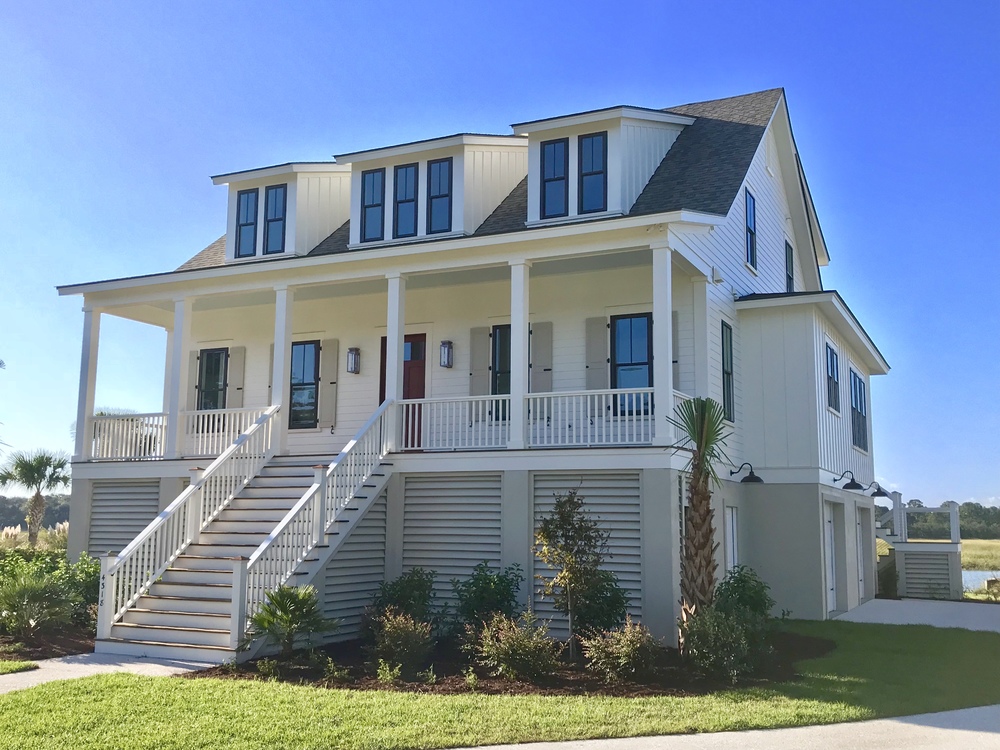
Homes built on bluffs or cliffs experience “wind amplification” as air is forced upward by the terrain. In this scenario, the “best” siding must have an exceptionally high DP rating. A failure mode often seen here is “fastener pull-through,” where the wind pulls the siding panel right over the head of the nail. The solution is the use of “oversized heads” or “load-spreading washers.”
Scenario 2: The Tornado Alley Derecho
High-velocity straight-line winds carry heavy debris. Fiber cement siding often fails here not due to wind pressure, but because of “star cracking” from impact. Once the material is cracked, subsequent wind gusts tear the panels from the wall. The second-order effect is the exposure of the insulation to torrential rain, leading to immediate interior damage.
Scenario 3: The Microburst and Internal Pressurization
If a garage door or window fails during a high-wind event, the internal pressure of the home spikes. If the siding is not properly vented or back-ventilated (via a rainscreen), this pressure can pop the siding off the exterior. A “pressure-equalized rainscreen” is the strategic defense here, allowing the air pressure on both sides of the siding to remain the same.
Planning, Cost, and Resource Dynamics
The economics of high-wind siding must be calculated as an insurance premium rather than a standard construction cost.
-
Direct Costs: High-wind rated materials can cost 20–40% more than standard counterparts. Specialized fasteners (stainless steel, ring-shank) add significant cost to the hardware budget.
-
Labor Variability: Installation in HVHZs requires meticulous adherence to nailing schedules (e.g., 4 inches on center versus the standard 8 inches). This increases labor hours by approximately 30%.
-
The “Retrofit Tax”: Installing high-wind siding on an older home often requires stripping the sheathing to verify the stud-to-plate connection, adding unforeseen structural costs.
Cost vs. Risk Mitigation Table (3,000 Sq. Ft. Project)
| Material | Initial Cost | Wind-Rated Labor | Ins. Premium Change | 50-Year Value |
| Standard Vinyl | $25,000 | Low | Increase | Low |
| Fiber Cement | $45,000 | Moderate | Neutral | Moderate |
| Engineered Wood | $42,000 | Moderate | Decrease | High |
| Heavy-Gauge Steel | $70,000 | High | Significant Decrease | Exceptional |
Tools, Strategies, and Support Systems
The success of a high-wind envelope depends on a specialized suite of tools and installation strategies:
-
Ring-Shank Nails: These provide up to 2x the withdrawal resistance of smooth-shank nails, essential for resisting negative pressure.
-
Structural Sheathing (OSB/Plywood): Siding in high-wind areas should never be installed over foam board alone; it requires a structural substrate for nail engagement.
-
Pressure-Equalized Rainscreen Mats: These allow air to circulate behind the siding, neutralizing pressure differentials.
-
Stainless Steel Fasteners: In coastal areas, salt air weakens galvanized nails over time. A weakened nail is a point of failure in a storm.
-
Adhesive-Backed Flashings: These provide a secondary water seal if the primary cladding is breached.
-
Blower Door Testing: Used to ensure the air barrier is intact before the siding is applied.
-
Corner Reinforcement: Using extra-thick trim or metal “corner caps” to protect the most vulnerable areas of the facade.
Risk Landscape: Taxonomy of Compounding Vulnerabilities
The failure of a high-wind facade is rarely the result of a single factor. It is usually a “cascading failure.”
-
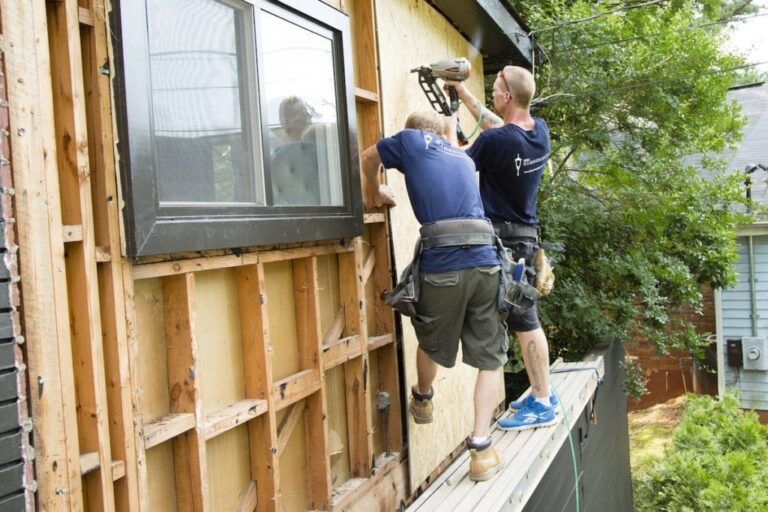
The Nail-Miss Risk: If a contractor misses the stud by even 1/2 inch, the fastener is only holding into the sheathing. In a 120 mph gust, that specific panel will fail, creating a “leverage point” for the wind to tear the adjacent panels.
-
Galvanic Corrosion: In coastal areas, using copper flashings with steel siding can cause the fasteners to corrode prematurely, leading to a silent loss of wind-load capacity.
-
The “Peel” Effect: Once a single corner piece is lost, the wind can get “behind” the siding, turning the cladding into a sail.
Governance, Maintenance, and Long-Term Adaptation
Maintaining a high-wind rated facade is a matter of governance and periodic auditing:
-
Post-Event Inspection: After any wind event exceeding 60 mph, the building should be inspected for “chatter marks”—small gaps between the siding and the wall that indicate fasteners have begun to loosen.
-
Fastener Recess Audit: Fiber cement nails that are driven too deep (over-driven) lose their holding power. These must be identified and “sister-nailed.”
-
Sealant Integrity: High-performance sealants act as the “glue” that keeps wind from entering joints. These must be replaced every 10–15 years to maintain the DP rating.
Measurement, Tracking, and Evaluation
How do you evaluate if you have the best siding for high wind areas?
-
Leading Indicators: Fastener engagement logs. A professional installer should document the torque and depth of fasteners at regular intervals.
-
Lagging Indicators: Structural performance during a storm. The lack of “rattling” during a 50 mph gust is a qualitative sign of a tight assembly.
-
Qualitative Signals: The “Plumb Line” test. After a major wind event, check if the horizontal lines of the siding have shifted. Any shift indicates that the system has reached its “plastic limit” and may need reinforcement.
Common Misconceptions and Oversimplifications
-
Myth: “Vinyl is fine if it’s thick.” Correction: Vinyl is a “hung” system; it is designed to move. In high winds, this movement allows air to get behind the panels, which can lead to rapid “unzipping” of the facade.
-
Myth: “Brick is the ultimate wind-proof siding.” Correction: Brick is a heavy “reservoir cladding.” While it resists impact well, its metal ties can corrode invisibly. If the ties fail, a brick wall can collapse outward in a single piece during a wind event.
-
Myth: “Impact-rated means indestructible.” Correction: Impact ratings (like Class 4) mean the material won’t breach. It may still dent or crack, requiring replacement, but its “success” is defined by protecting the interior of the home.
-
Myth: “Nails are better than screws.” Correction: In high-load metal siding, specialized “TEK” screws with EPDM washers offer far superior withdrawal resistance and sealing compared to nails.
Ethical and Environmental Considerations
In the luxury and high-performance sector, resiliency is a form of sustainability. The “greenest” building is the one that doesn’t need to be rebuilt after a hurricane.
-
Embodied Carbon of Replacement: Choosing a “cheap” siding that fails every 15 years has a much higher carbon footprint than a high-performance steel or engineered wood system that lasts 50 years.
-
Recyclability of Metal: Architectural metals like zinc and aluminum are 100% recyclable, making them an ethical choice for those in high-wind coastal areas who want both performance and circularity.
Synthesis: The Future of Wind-Adaptive Facades
The mastery of the high-wind envelope is moving toward “Active Aerodynamics.” We are seeing the development of siding profiles that use biomimicry—inspired by shark skin or bird feathers—to break up wind turbulence and reduce the negative pressure on the wall. Furthermore, the integration of “Smart Fasteners” that can alert a property owner to structural stress is on the horizon.
Ultimately, the judgment of a facade is its silence during a storm. By prioritizing the physics of the assembly—the fastener depth, the rainscreen cavity, and the material’s flexural strength—the property owner ensures that the home’s exterior is not just a mask of prestige, but a functional, resilient, and honest expression of engineering mastery. The “best” siding is the one that remains invisible, doing its work precisely when the environment is at its most visible and violent.